What Is a Condominium?
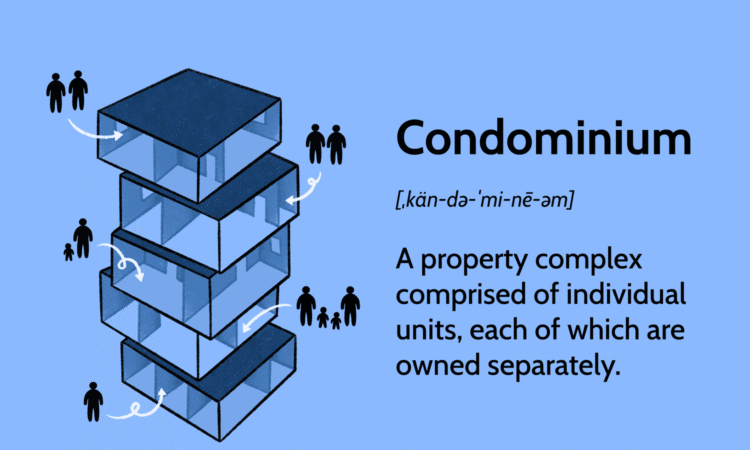
A condominium is an individually owned unit within a larger residential complex composed of similar units.
A condo owner typically has shared ownership of community property, such as floors and stairwells, which is managed by the condominium association.
Condos involve ownership, as opposed to rental, like in apartments. Another difference is the monthly fees that condo owners usually pay to a condominium association for property upkeep and common area maintenance.
A condo association or management is usually made up of a board of unit owners who oversee daily operation of the complex, such as lawn maintenance, snow removal, and building updates.
Key Takeaways
- A condominium is an individually owned unit within a larger residential complex, unlike apartments, which are rented.
- Condo owners typically pay monthly fees to a condominium association for property upkeep and common area maintenance.
- Condos may require owners to pay special assessments for major repairs not covered by regular fees.
- The main advantage of condo living is access to shared amenities like pools and fitness facilities without extra cost.
- Owners of condos enjoy less privacy and face restrictions from condo associations compared to single-family homeownership.
Understanding Condominium Ownership and Management
Condo owners actually own the “air space” within their unit in a multi-unit development. This means that the condo owner’s title to the property does not include the four walls that divide their unit from other units or common areas in the property. The floor, ceiling, sidewalks, stairwells, and exterior areas are all part of the common ownership of the condo—known as limited common elements.
One common type of condominium is a residential high-rise that provides housing for several different families. However, the concept is not limited to high-rise buildings or residential properties. Residential townhouses are sometimes developed as condominiums. Commercial properties, like office buildings, can also be structured as condos.
Important
Condos, like apartments, suit those who prefer shared community living without the hassle of maintenance tasks such as lawn care and property management.
Key Considerations for Condominium Buyers
Developers offer parking spaces and garages to unit owners in different ways. In some developments, these spaces are reserved as limited common areas, and the condo association maintains ownership but gives exclusive rights for the unit owner to use the space or garage.
In other developments, the unit owner buys the garage or parking space and has ownership. However, the covenants, conditions, and restrictions may still limit the owner’s ability to sell or rent the space independent of the unit itself.
Comparing Condominiums and Apartments
The big difference between a condo and an apartment is that you generally own a condo, while you rent an apartment. Apartment buildings are usually owned by a single owner (such as a property management company), and the buildings are used solely for rental purposes. However, condos that are rented out to tenants are sometimes referred to as apartments.
Thus, the only notable difference between a condominium and an apartment is ownership. A condo is generally something you own, while an apartment is something you rent.
Essential Condominium Ownership Requirements
The declaration of covenants, conditions, and restrictions is a legal document outlining rules for condo unit owners.
This document defines the acceptable use of the unit. It describes the owner’s use of limited common areas and general common areas. The declaration includes rules for selecting the board for the homeowners association. This board manages the development, directs repairs and maintenance of the common areas, and assesses fees.
Unit owners pay condo fees for insurance, shared utilities, and future maintenance reserves.
Condos may also include the fees the association pays to a management company for the daily operation of the development. Condo fees can rise, and major maintenance costs not covered by reserve funds may be charged to owners.
Weighing the Pros and Cons of Condo Living
Buying a home is usually a major investment, so it’s vital to know the pros and cons, especially for condos, due to financial, legal, and tax implications.
Pros
-
Shared amenities
-
Security services
-
Common area maintenance
Pros Explained
- Shared amenities: Condo living affords its owners several benefits, such as access to amenities that are ordinarily only accessible at a cost. Owners can enjoy the exclusive use of swimming pools, tennis courts, and fitness facilities at no extra cost. Some high-end condos even provide access to spas, rooftop entertainment spaces, and gardens.
- Security services: Many condo associations employ security services to safeguard their community and protect their residents. This may be as simple as a gate and a doorman in the front lobby. It can also be more complex, such as camera surveillance or patrols by security personnel. Either way, the community benefits from extra eyes warding off would-be intruders and additional peace of mind as a result.
- Common area maintenance: Condo associations are responsible for maintaining common areas such as the amenities. Owners can enjoy the facilities without worrying about cleaning them.
Cons Explained
- Fees and special assessments: Condo owners must pay association fees for community upkeep, covering common areas, exteriors, and some interior maintenance. Fees can vary according to what they support. For major repairs, condo owners may be assessed a special fee to cover the costs. These special assessments can be thousands or tens of thousands of dollars.
- Less privacy: Much like apartments, condos often share common walls, as well as common spaces. Living in proximity and sharing walls and spaces limits the amount of privacy one can enjoy. In contrast to single-family detached houses, residents must tolerate neighborly nuisances.
- Additional restrictions from condo associations: Condos are managed by condo associations that impose certain rules and restrictions on owners. The condo association governs how common spaces can be used, to what extent condo owners can make improvements or changes to their units, and sometimes who can enjoy those spaces with them.
What Does Condo Mean?
A condo, short for condominium, is an individually owned residential unit in a building or complex composed of other residential units. Condo owners share a common space and often pay association fees to maintain the common space, amenities, and other shared resources.
What Is the Difference Between an Apartment and a Condo?
Apartments are individual residential units within a building or complex that are rented by their occupants. The entire building is usually owned by a property management company. In contrast, condos are residential units within a building or complex that are separately owned.
Are Condos Cheaper than Houses?
Condos are generally less expensive than single-family houses in the same area. Condo owners pay an association fee that covers maintenance costs, amenities, and other resources. These fees are generally less than the costs to maintain a house. However, some condos, especially luxury condos in affluent areas, can command much more than the average house.
Are Condos Cheaper than Apartments?
The direct cost to reside in the unit can be more expensive than owning a condo since the owner will charge more than the cost of a mortgage to make a profit. However, on average, renting an apartment is less expensive than owning a condo, as apartment renters do not pay association fees. Condo owners must also pay for maintenance and repairs, while apartment renters do not.
What Is a Condo Assessment?
An assessment is a fee billed to condo owners for major repairs or enhancements not covered by the regular condo fees. The assessment fee is generally based on the size of the unit. If all units are the same size, each owner will pay an equal assessment amount.
The Bottom Line
Condominiums are individually owned residential units within a larger complex. Condo owners own their units but share common areas, amenities, and other resources.
Monthly condominium fees are necessary for amenities, maintenance, upkeep of community property, and possible special assessments for major repairs. While condos have these added fees, they are generally less expensive than single-family houses.
Pros of condo living include shared amenities and security, while cons include less privacy and restrictions from condo associations.
It’s important to understand the declaration of covenants, conditions, and restrictions involved in condominium ownership. Consider all the implications and carefully weigh the pros and cons before deciding whether to buy a condo.