Real estate agents adjusting to court ruling regarding buyers’ agents’ fees | Local

Mary Sherer is a pro at helping homebuyers, the result of working in her industry for more than 30 years.
But for the past year, there are days when the Fort Wayne woman feels like a real estate rookie.
A 2024 settlement upended the way agents representing buyers are paid. The plaintiffs alleged in a lawsuit that the National Association of Realtors broke antitrust laws by conspiring with brokerages to inflate commissions paid by home sellers.
The defendants ultimately agreed to pay $418 million to settle the case. Next month marks one year since a judge signed off on the deal.
Previously, home sellers worked with their agents to decide what percentage of the sales commission would be shared with the buyer’s agent. The amount – either a percentage of the sales price or a flat fee – was advertised online with the property listing. The upfront disclosure created an incentive for sellers’ agents to agree to an amount high enough to motivate buyers’ agents to book showings.
If, for example, seller’s and buyer’s agent split a fee of 6% of the $200,000 sales price of a home, each would walk away with $6,000.
“It worked really well,” Sherer said of the old system. “The change has been a learning curve.”
New regulations
Now, buyers must sign a contract committing to work with a real estate agent for a specific period of time.
Although buyers will often end up paying their broker, the new rules don’t prevent a seller from offering to pay that commission. Such an offer just can’t be advertised, according to the National Association of Exclusive Buyer Agents, a nonprofit created in 1995 by consumer advocates.
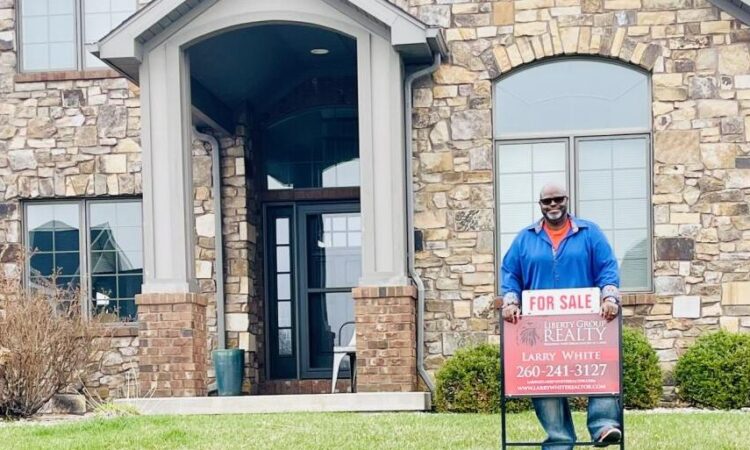
Larry White, who owns Liberty Group Realty, said agents’ fees have always been negotiable, even before the lawsuit settlement.
“To be honest, there really wasn’t much of an adjustment,” he said. “Some people assumed the seller always pays (the buyer’s agent’s fee), but that’s not necessarily the case.”
One of real estate agents’ responsibilities is to prepare clients upfront that who pays the fee could become a sticking point during negotiations, White said. Some negotiations fall through over that very issue.
The buyer agents association has expressed concern about the possibility that more agents will represent both the buyer and seller, a situation that could compromise their loyalty to each party. The association contends that homebuyers’ interests are best served by brokers who work exclusively for them.
White has been in the position of representing both buyer and seller. Professional ethics prevent him from telling the seller the highest price a buyer will pay and disclosing to the buyer the lowest price a seller will accept.
“It’s being honest with both parties,” he said. “No one has to lose in a real estate transaction at all.”
White said the solid reputation he has established during 22 years in the industry is too precious to risk losing.
Consumers “can tell when someone is taking them for a ride,” he said. “Your reputation is everything.”
Demonstrating value
Evan Riecke, who owns the local Encore/Sotheby’s franchise, said agents who haven’t established a successful track record could have a harder time attracting clients after the fee change.
“It’s going to weed out a lot of buyer agents” who can’t show the client how much value they bring to the table, he said.
Riecke, who has worked in real estate for nine years, said he’s been busier since buyers are required to sign exclusive agreements with brokers.
“It has caused buyers to really hesitate before signing a document with an agent they’ve maybe never met,” Riecke said, adding that buyers are spending more time asking friends for referrals than they previously did.
Sherer’s concern about exclusive contracts is that buyers could be forced to sign the document before they really get to know the agent they’re going to work with.
“I don’t want to work with somebody who doesn’t want to work with me,” she said. “I think it puts undue pressure on the buyer.”
As a result, Sherer offers to sign a one-day contract with a potential buyer who wants to view a specific property. But, she said, some of the 14 agents she oversees at ERA Crossroads prefer different terms, ranging from three months to a year.
Such agreements can be both extended and ended – if both parties agree, she said.
Riecke is willing to sign a contract that applies to only one property for first-time clients. After that, the duration of Riecke’s exclusive representation is negotiable but typically lasts six months.
He described the new rule regarding the buyer’s agent’s fee as “definitely a big change.”
“I think it creates a lot more confusion between buyers and sellers,” he said.
Even so, Riecke said, “I think the good agents are probably still going to get the 3% (of home sale’s price as a fee) whether the buyer pays it or the seller pays it.”
Choosing buyers
Like White and Sherer, Riecke represents both buyers and sellers. Of the 46 deals he closed last year, 26 were on the sales side.
Lynn Reecer, for one, prefers an exclusive arrangement between buyer’s agent and client. She now works exclusively on the homebuyer side following stints with her own firm, Reecer Properties, and as the former franchisee for Encore/Sotheby’s.
“I believe in it being like attorneys: each side pays for their own attorney,” the local broker said. “I prefer it that way.”
Reecer, who has partially retired, has been in the industry for 15 years. She said clients shopping for an agent to sell their home might find it easier to understand the benefit of hiring someone who can bring a lot of attention to the listing. But, Reecer added, buyers’ agents also add value when negotiating contracts and myriad other details involved in buying a home.
Reecer described the buyer’s agent payment change as being good for the overall industry. But she knows that others don’t necessarily share her view.
“That really changed everything,” Reecer said of the rule taking effect in Indiana last July 1. “It’s such a controversial issue.”
Sherer started her career by mostly representing house hunters. But in those days, she said, homebuyers didn’t have to sign a contract with their agent until it came time to make an offer.
Maintaining strong client relationships has helped Sherer succeed, placing in the top 5% of Realtors in the Fort Wayne market for more than 10 years and averaging 65 closed deals a year. She has, at times, represented the grandchildren of previous clients.
Even so, Sherer has been forced to change with the times.
“We’re working through it,” she said.