Buying a house used to be a rite of passage for middle-class Americans, but in recent decades, would-be homeowners have found themselves priced out of the market. The affordability crisis has become such a hot topic that in July the Senate Banking Committee approved a bill aimed at encouraging new home construction with rare unanimous bipartisan support.
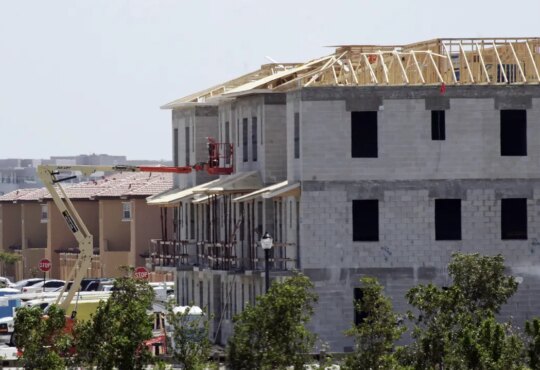
For policymakers set on making homeownership more affordable, bringing down building costs might seem like an obvious place to start: In areas where land for new construction is readily available, construction expenses account for 60–70 percent of the cost of bringing homes to market. (Land prices, as well as legal, engineering, and financing costs, account for the remainder.)
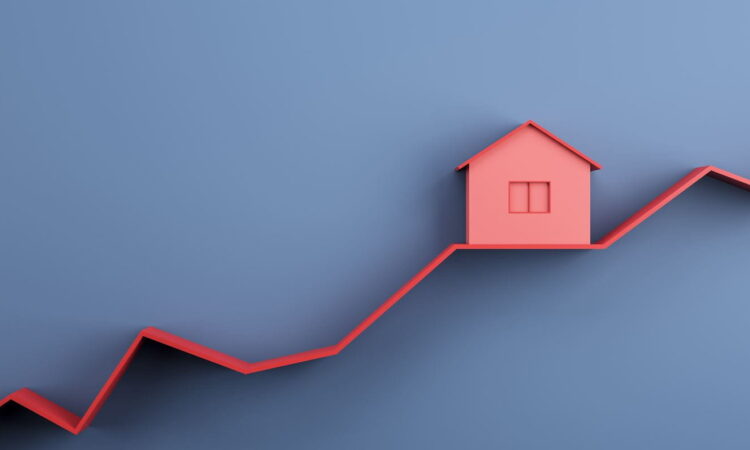
But research from the Institute for Progress’s Brian Potter and Chicago Booth’s Chad Syverson finds that house-construction costs are likely not the primary culprit behind skyrocketing house prices. Looking at nearly 75 years of data, they find that changes in building costs have never been closely tied to house price growth overall, and that the link between the two has weakened further in recent decades.
Potter and Syverson analyzed the connection between building costs and US house prices from 1950 through 2024. They tracked construction costs using RSMeans Data, and to gauge house prices, they drew on multiple home-price indexes.
One notable pattern that emerged was the rate at which both costs and prices increased. Relative to the inflation measure known as the GDP deflator, the Consumer Price Index rose about 20 percent during the study period, whereas both home-construction costs and prices more than doubled.
Early in the postwar era, construction costs grew faster than housing prices. However, the rate of home-price increases began to outpace construction-cost rises in the late 1970s. Since 1975, cumulative house-price growth in the Federal Housing Finance Agency’s House Price Index has outpaced building-cost increases by at least 60 percent.