ST. PAUL — Minnesota lawmakers are revisiting efforts to empower manufactured home park residents and appropriate money for aging infrastructure after measures failed to pass last session.
Manufactured home parks, also referred to as “mobile home parks,” are designated plots of land where people own their homes but lease or rent the land lot. Minnesota is home to
900-plus manufactured home parks,
according to the Minnesota-based nonprofit Mobile Hope. There are an estimated
of the home parks statewide, according to the North County Cooperative Foundation.
Rep. Matt Norris, DFL-Blaine, has become a champion of the manufactured home park efforts. He said his district is home to six different parks, about 1,900 units, and his constituents have come to him over the years asking for help at the state level.
Norris says manufactured home parks are unique in the housing sphere — some people compare rent control efforts to those for apartments, but he said the difference is that renters in apartments can more easily pack up and leave.
“You don’t have that option when you’ve invested years of equity into your home. They’re called mobile homes, but they’re not particularly mobile once they’ve been in place for a couple of years, and so these residents are at a real disadvantage in terms of bargaining power,” Norris said.
He said that’s why private equity has decided to “home in on manufactured housing,” because they see it as an area where they can “extract profits” when residents are “stuck.” He’s heard that at national conferences, some in the industry have compared owning a manufactured home park to “owning a Waffle House where the customers are chained to the counter.”
“It’s horrible to think about it that way, but when you think about their inability to move, they’re again forced to either, walk away from the equity they’ve built in their home over all these years, or cut back on groceries and gas and medicine to try to make that lot rent every single month,” Norris said.
Emily Stewart, associate director with the CoNorth Cooperative, told lawmakers on Thursday, April 9, that the rate of out-of-state acquisition of Minnesota’s manufactured home parks is increasing.
“Since 2015, out-of-state investors have acquired nearly 30% of the state’s manufactured housing stock, including 142 communities, which represents 13,533 homes,” Stewart said. “I want to highlight a couple of recent park sales that happened that went to actually private equity, specifically Haven Park Capital, Zenith Terrace in Duluth. About 500 units in that community sold for $44 million which is $11 million over its value.”
One bill heard in the House Housing Finance and Policy Committee on Wednesday would appropriate $15 million into an existing fund for manufactured home park infrastructure improvements. Most of the home parks were built around the 60s and are experiencing aging infrastructure.
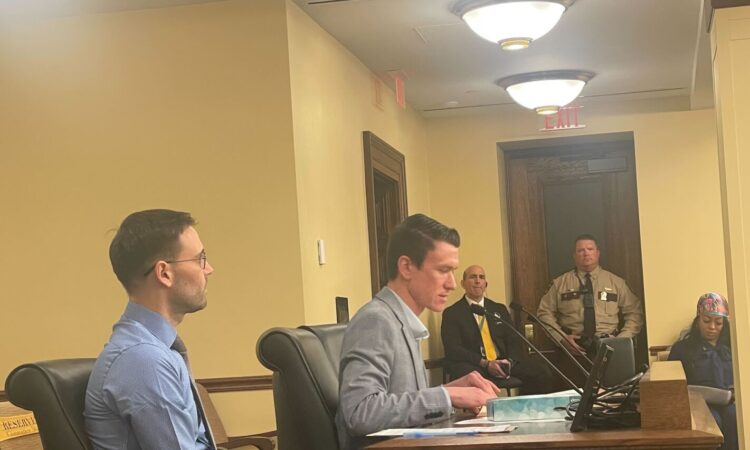
Bev Adrian, president of the Woodlawn Terrace Cooperative in Richfield, said past grants from the fund helped their 1930s-era mobile home park connect to city water lines — holding up a jar of brown, yellow-tinged well water to show the quality residents had previously.

Screen shot / MN House Info
Even so, she said infrastructure needs are still high.
“Unfortunately, the grant that we received wasn’t enough to cover the cost for our sewer line relining. Our pipes are very old, probably 50 years old, and we have consistent problems with breakage and roots, and it’s an ongoing issue,” Adrian said.
The grants bill was laid over for possible inclusion in an omnibus bill, but showed signs of bipartisan support. Rep. Wayne Johnson, R-Cottage Grove, said he could see the grants preventing more private equity from coming in.
“It gives another tool for mom and pops to be able to stay and own the parks and deal with the rent,” Johnson said. “Your infrastructure is falling apart. How are you going to spend that money and be able to not raise the rent huge and be able to own it?
“And that gives them more incentive and more reasons that they have to have somebody come in and say, ‘Well, we’re take those problems away from you, and it just creates more problems.’”
Lawmakers
a manufactured home park
to give tenants more power on various fronts, but notably capping rent increases at 3%. The bill of rights has seen more resistance, mostly for the rent piece. It’s stuck in committee in the House but has traveled further in the Senate, and awaits action on the Senate floor.
Another bill,
heard in the Senate Housing and Homelessness Committee on Thursday, would give residents 10 days to stay in their home following eviction and up to 90 days to arrange to remove the resident’s home after eviction.
“I toured my local one, and they said, ‘Well, you know, in about three months, we can lose our home that we spend $180,000 for and have nothing to show for it,’ which really troubles me,” Sen. Jim Abeler, R-Anoka, author of the bill, said Thursday.
Erin Lambert, a lawyer representing 13 manufactured communities throughout the state, spoke in opposition, saying the bill eliminates judicial discretion and raises public safety concerns.
“This is especially concerning in those cases involving residents who have engaged in harassment, threats or violence against other residents or other property managers,” Lambert said.
Norris said it’s too early to tell yet whether the needle will move on the new measures for manufactured home parks, but that he’s “hopeful.”
“The crystal ball on what’s going to happen this session is fuzzy,” Norris said. “On one hand, you’ve got … grants for rehabilitating infrastructure, that’s got strong bipartisan support. But the question is, where does the money come from? And are we even going to have a housing budget bill to fund things like this?
“On the other hand, the manufactured home park resident bill of rights is more controversial, but it doesn’t have a budget impact.”
The Legislature isn’t in a budget year, but some budget pieces could still move this session.
Norris said he thinks there’s a good chance the bill of rights gets passed out of the Senate, but its fate in the tied House is less certain.
“Then it’s going to come over to the House and representatives are going to have to decide, are they on the side of their neighbors in manufactured housing, or they on the side of these big private equity firms that are buying up the parks and jacking up the rent?” Norris said.
During the DFL trifecta in 2023-24, lawmakers passed some measures, such as enhanced notice requirements for when a park goes up for sale and tax incentives for owners to sell to resident-owned cooperatives.