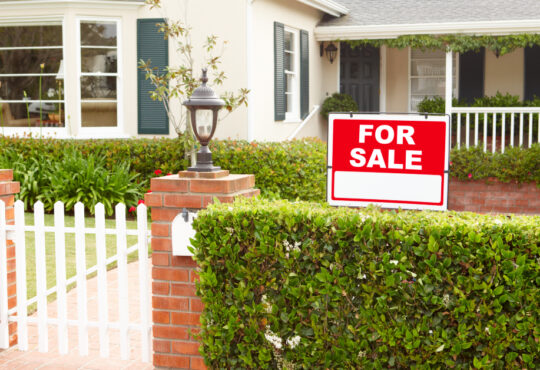
Anybody who puts their home on the market wants to get the highest possible price for it (obviously!) — and ideally that means getting more than you paid for it, so that you can wipe out any existing mortgage debt and still have a nice nest egg left.
Cheap Paradises: 50 Cheapest, Safest Places To Live in the US
Sign Up: Start Growing Your Net Worth With Smarter Tracking
But let’s be real: In a climate where the home sales rate is stuck at a 30-year low and more than half of U.S. homes’ estimated value have dropped in value within the past year, making a hefty profit off a sale is often not in the cards.
What do you do if you want to sell your home but are certain (based on the expert opinion of local realtors) that you will take a loss? Is it ever okay to just accept this and move forward with a sale — or should you wait until, hopefully, your home’s value skyrockets? We talked with real estate experts to find out when selling your home for a loss is the right move.
All Markets Are Impossible To Predict
Jeff Lichtenstein, CEO and broker at Echo Fine Properties in Florida, likened real estate to stocks in that, when you go to sell, a loss may be inevitable and, possibly, completely beyond your control.
“Events are hard to predict,” Lichtenstein said. “You could have been selling in March of 2006 only to see prices drop by double digits shortly thereafter in the Big Short market. You could be selling in February of 2020 only to find out that prices in South Florida went sky-high during the pandemic.”
As it doesn’t make sense to try and time the market, it doesn’t make sense to wait to sell (likely while still paying off your mortgage on that home) in the hopes that circumstances will improve.
You Could Be Positioned To Save on Your Next Home
Consider that other sellers are taking a loss too, meaning the home you buy while selling your previous one could be something of a steal.
“If housing markets everywhere are down and the seller is also buying elsewhere, they may get their new home also at a discount or exchange like for like,” said Joannah Connolly, head of content and PR at HouseSigma. “If they remain in the market long-term, it might well make zero financial difference! It could even end up making them more money, if the new home is in an area that ends up appreciating faster than their old neighborhood. So there are many different facets at play here.”
Selling at a Loss Could Be the ‘Least Bad Choice’
“There are certainly instances where a loss sale would be the least bad choice,” said Levi Rodgers, co-founder at VA Loan Network. “A client of mine purchased near the top of the market and then had to move for a new job in the first two years. They looked down on paper, but the longer they stayed in the home, the more money they would be throwing away every month in mortgage payments, HOA, insurance and maintenance they could no longer afford.
“We did the math and it would end up costing them more in the long run to wait it out versus just taking the loss and moving forward,” Rodgers said. “That’s when a loss sale makes the most sense.”
Sometimes It’s Worth It Just To Be Done With It All
Weighing whether to sell your home at a loss needs to involve not only thinking about your finances, but also thinking about your peace of mind.
“How much is it worth to a seller to be ‘done and over?'” said Kati Spaniak, YouTube content creator at Sell Your Home With Kati Spaniak. “Maybe it’s $5,000 or $10,000. But sellers need to realize that a home is not always a positive financial investment and sometimes it’s better to let go and realize that while it wasn’t a winner financially, it allowed them to live a life that they loved in a home that they loved.”
This article was provided by MoneyLion.com for informational purposes only and should not be construed as financial, legal or tax advice.
More From MoneyLion: